Who runs it, how it is paid, what it will and will not tell you, and why it takes no share of what anything turns out to be worth.
A patent owner weighing assertion is surrounded by advice from parties paid on the outcome: contingency counsel, litigation funders, brokers, monetisation firms, and the occasional valuation that exists to support a transaction. A disinterested read on whether the technical case holds and whether the damages theory would survive challenge is the one thing rarely available, and it is the thing that decides whether any of the rest is worth doing.
The Intellectual Property Institute exists to supply that read, and to make the first hour of it free. Anyone can use the Institute’s concierge at no charge: it asks what is asserted and how far along the matter is, says plainly what evidence is at risk of being lost, explains what the technical analysis would examine, and identifies what kind of expertise the matter actually needs.
The reference material covers three areas, in the order a matter moves through them. What the patent covers and whether the accused thing practices it. Whether information qualifies as a trade secret and whether the record shows it was taken. And whether a damages theory rests on evidence that will survive Rule 702, which is where an increasing share of otherwise successful cases now fails.
What the Institute does not do is monetise intellectual property. It does not litigate, does not prosecute or broker patents, does not run licensing programs, and takes no percentage of any recovery. That is not modesty about scope; it is the condition that makes the analysis worth anything.
The orientation and the reference material are free and stay free. Where a party wants the technical or evidentiary review performed properly and independently — ideally before a damages theory has been committed to in a pleading — that is a private engagement billed as a fixed fee agreed in writing before any work begins.
Where a matter requires a retained testifying expert, for a technical opinion, a forensic examination or a licensing and comparability analysis, the Institute arranges the engagement through its expert network and is compensated for that work.
The Institute takes no contingency and no share of any recovery, and accepts no compensation from litigation funders, patent brokers or monetisation firms. No sponsorship, no referral fee, no affiliate arrangement, no paid placement. That matters more here than in most fields: an assessment of what an asset is worth asserting, produced by someone paid out of the assertion, is worth very little, and everyone in this market knows it.
We publish this because the people reading it cross-examine for a living or underwrite portfolios for a living, and should not have to guess.
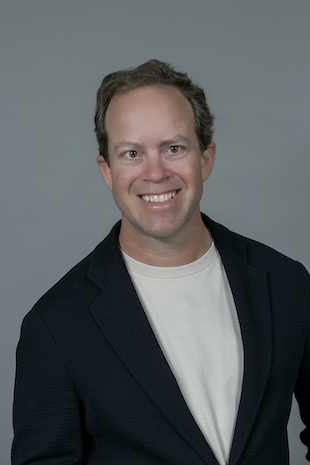
Russ Rosenzweig was named Executive Director of the Intellectual Property Institute in September 2026. He was one of the pioneers of the expert witness industry and has decades of experience helping clients understand complex technical disputes and connecting them with the right experts and knowledge bases.
He founded the first expert witness search and referral firm in 1993 and led it for three decades, connecting thousands of attorneys, insurers and companies with specialized experts. His clients have included most of the largest law firms in the United States.
Intellectual property is the hardest version of the matching problem he has worked on throughout that career. A single matter can need a technical expert in the field of the invention, a licensing economist, a survey methodologist and a digital forensic examiner, and the wrong choice on any one of them is rarely obvious until the deposition. Three decades of watching which combinations hold up under cross-examination is the relevant experience here.
B.A., Northwestern University · M.B.A., University of Chicago Booth School of Business
IP disputes rarely sit inside one discipline. Claim construction and infringement need someone genuinely expert in the field of the invention, not in patents generally. Trade secret matters need a forensic examiner whose methodology will survive challenge. Comparability and apportionment need a licensing economist, and feature-level value frequently needs a survey methodologist whose design will withstand its own Daubert motion.
The Institute draws on a working network built over thirty years across those fields, and engages specialists matter by matter; they remain independent. Its role is to work out what the matter actually requires and then find the right person, including saying when the answer is a discipline it does not itself cover.
No contingency, no percentage of any recovery, and no compensation from funders, brokers or monetisation firms. A view on what an asset is worth asserting, from someone paid out of the assertion, is worth very little.
Where a visitor describes a recent departure, the concierge raises device and account preservation before it discusses anything else. Ordinary IT process destroys that record within weeks.
The Institute explains what the analysis asks and what evidence it needs. Whether a patent is infringed or valid, or whether information is a trade secret, is the expert opinion this site helps you obtain, not the one it supplies.
Patent owner and accused infringer, claimant and defendant. The technical facts do not change according to who asked, and an institution that only reached convenient conclusions would be worth consulting from neither side.
The admissibility law here moved twice in eighteen months, in both directions. Anything stated carries what it rests on and when, and the writing is re-verified rather than left to age.
Errors, once known, get fixed. If something on this site is wrong, tell the Institute and it will be reviewed and corrected.
Start free with the IP Concierge, or talk to the Institute directly.